

Gold jewellery holds profound significance during Lunar New Year, symbolising prosperity, good fortune, and family blessings passed down through generations. Whether you’re wearing a treasured heirloom from your grandmother or recently purchased pieces to welcome the new year, these celebrations present unique challenges for keeping your gold in pristine condition. Between steaming hot pot dinners, crowded family gatherings, and the constant exchange of red packets, your precious pieces face exposure to oils, sweat, cosmetics, and physical contact that can dull their shine or cause damage.
The good news? Protecting your gold jewellery during Lunar New Year festivities doesn’t require complicated routines or expensive professional services. With some preparation before the celebrations begin and mindful handling throughout the holiday period, you can ensure your pieces remain as brilliant as the occasion demands. A little forethought goes a long way in preventing scratches, loose settings, or tarnished surfaces.
This guide walks through practical strategies for every stage of the celebration period: from pre-festivity preparation to post-celebration cleaning and storage.
Preparing Your Gold Jewellery for New Year Celebrations
The week before Lunar New Year is typically chaotic: cleaning the house, shopping for ingredients, wrapping red packets. But carving out thirty minutes for your jewellery now prevents hours of restoration work later. Think of it as preventive maintenance rather than an optional extra.
Start by gathering every piece you plan to wear during the festivities. Lay them out on a soft cloth and examine each one under good lighting. Look for any obvious issues: dull spots, visible dirt in crevices, or pieces that feel rough rather than smooth. This assessment determines whether you need professional help or can handle cleaning yourself.
Professional Polishing vs. At-Home Cleaning
Professional polishing produces results you simply cannot replicate at home. Jewellers use ultrasonic cleaners and specialised polishing compounds that remove microscopic scratches and restore the mirror-like finish that makes gold truly gleam. If your pieces haven't been professionally cleaned in over a year, or if they're high-value heirlooms, schedule an appointment at least two weeks before New Year. Jewellers get swamped in the lead-up to celebrations, so booking early matters.
For pieces that just need freshening up, at-home cleaning works perfectly well. Mix a few drops of mild washing-up liquid into warm water—never hot. Soak your gold pieces for fifteen to twenty minutes, then use a soft-bristled toothbrush to gently clean around settings and in chain links. Rinse thoroughly with clean water and pat dry with a lint-free cloth.
What you should never use: toothpaste, bicarbonate of soda, or any abrasive cleaner. These scratch gold's surface, creating tiny grooves that trap dirt and dull the finish over time. Chlorine-based cleaners are equally problematic, as they can actually discolour gold, particularly lower-karat pieces.
Inspecting Clasps and Prongs Before Wearing
Check every clasp by opening and closing it several times. It should snap shut firmly without excessive force. If a clasp feels loose, wobbly, or doesn't click closed properly, don't wear that piece until it's repaired.
For rings with gemstones, hold them close to your ear and tap them gently. You shouldn't hear any rattling or movement. Visually inspect each prong: they should sit flush against the stone with no gaps. If a prong looks lifted or bent, a jeweller can re-tip it quickly, but only if you catch it before the stone falls out.
Protecting Gold Pieces During Reunion Dinners
Reunion dinners are the centrepiece of Lunar New Year celebrations, and they're also where your jewellery faces the most environmental stress. Between the cooking, the eating, and the hours spent in close quarters with family, your gold pieces encounter heat, humidity, and countless opportunities for contact damage.
Avoiding Damage from Steam and Cooking Oils
If you're involved in preparing the meal, remove your rings and bracelets before you start. Cooking oils coat gold surfaces and attract dust particles that become embedded in the residue. Steam from boiling water or steaming dishes causes rapid temperature changes that stress metal over time.
Keep a small dish or container in the kitchen specifically for jewellery. Something with a lid works best, protecting pieces from splashes whilst keeping them visible so you don't forget them. If you must wear rings whilst cooking, at minimum remove them before handling raw meat or kneading dough, as food particles get trapped in settings and are difficult to clean out completely.
Preventing Scratches from Tableware and Cutlery
Gold scratches more easily than most people realise, especially higher-karat pieces. 24-karat gold is quite soft, and even 18-karat can pick up surface scratches from contact with harder materials. Ceramic plates, metal utensils, and glass serving dishes all pose risks.
Be mindful of bracelets when reaching for dishes or passing plates. Rings face similar hazards: gripping serving spoons, lifting heavy platters, or even just resting your hand on the table can bring gold into contact with hard surfaces.
The practical solution isn't to remove everything, which defeats the purpose of wearing your finest pieces. Instead, stay aware of your hands' positions and avoid pressing jewellery against hard surfaces.
Safe Handling During Traditional Customs and Visiting
The visiting period extends the celebration but also extends the exposure risks for your jewellery. You're constantly greeting people, applying touch-up makeup, and handling red packets, all whilst trying to maintain that fresh, polished appearance.
Managing Contact with Cosmetic and Hair Products
Apply all makeup, hairspray, and perfume before putting on your jewellery. This is the single most important rule for protecting gold during any occasion. Cosmetics contain chemicals that build up on gold surfaces, creating a film that dulls shine and can be difficult to remove without professional cleaning.
Hairspray is particularly problematic. It creates a sticky residue that attracts dust and lint, making pieces look grimy within hours. Perfume contains alcohol that can discolour gold over time, especially if applied directly to skin where jewellery sits.
If you need to touch up during the day, remove necklaces and earrings first. For rings you'd rather not take off, cover them with your other hand whilst spraying hairspray or apply perfume to pulse points where you're not wearing jewellery.
Securing Jewellery While Exchanging Red Packets
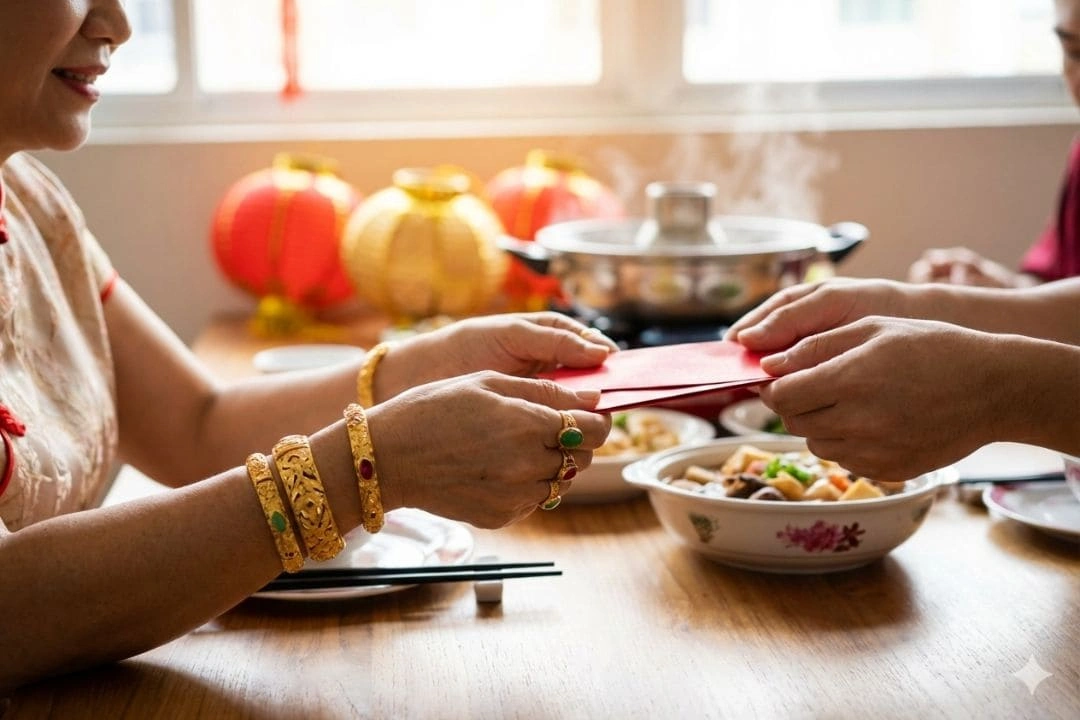
The constant giving and receiving of red packets creates opportunities for jewellery mishaps. Bracelets catch on packet edges. Rings slip off when hands are full. Necklaces swing forward when bowing to elders, potentially catching on clothing or red packets themselves.
Wear bracelets that fit snugly rather than loosely during visiting periods. For rings that feel slightly loose, consider wearing them on a different finger temporarily or using a ring adjuster.
When exchanging red packets, use both hands as tradition dictates, but be conscious of where your jewellery is positioned. Tuck long necklaces inside your clothing before bowing, and keep bracelets pushed up towards your elbow rather than at your wrist where they'll contact the packets.
Post-Festivity Cleaning and Maintenance
Once the celebrations wind down, your jewellery needs attention. Even if pieces look fine to the naked eye, they've accumulated oils, sweat, and environmental residue that will cause problems if left untreated.
Removing Sweat and Surface Residue
Sweat is acidic and, over time, can affect gold's surface finish. Clean all pieces within a day or two of the festivities ending—don't wait until you notice visible issues.
Return to the warm water and mild soap method described earlier. For pieces that saw heavy wear, extend the soaking time to thirty minutes. Use the soft toothbrush to work into every crevice, chain link, and setting. Pay particular attention to the backs of earrings and the undersides of rings, where skin contact was constant.
For stubborn residue, a mixture of warm water with a small amount of ammonia works well on plain gold pieces. Use one part ammonia to six parts water, soak for no more than one minute, then rinse thoroughly. Don't use this method on pieces with pearls, opals, or other porous gemstones, as ammonia damages these materials.
Gentle Drying Techniques to Prevent Water Spots
After rinsing, shake excess water off gently. Then pat each piece with a lint-free microfibre cloth—don't rub. Rubbing creates friction that can cause micro-scratches on soft gold surfaces. For chains and pieces with intricate details, lay them flat on the cloth and press gently to absorb water from crevices.
Allow pieces to air dry completely before storing. Lay them on a clean cloth in a dust-free area for several hours. Storing jewellery whilst still damp creates conditions for tarnish on any silver components and can cause moisture damage to fabric-lined storage containers.
Keeping Your Gold Brilliant Year After Year
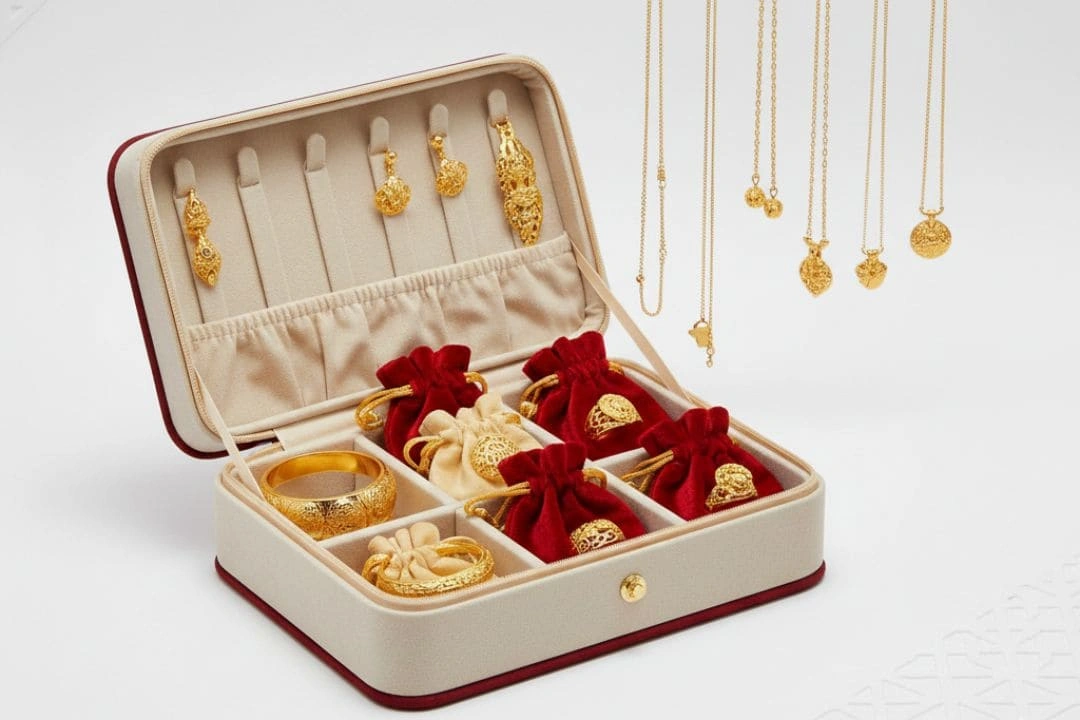
Caring for your gold jewellery during Lunar New Year festivities comes down to awareness and simple habits. Prepare pieces before celebrations begin, stay mindful during the busy visiting period, clean thoroughly afterwards, and store properly until next time. These practices protect both the monetary value of your pieces and their sentimental significance as symbols of prosperity and family connection.
The effort invested in proper care pays dividends across generations. Pieces maintained well can be passed down looking as brilliant as the day they were purchased, carrying forward the blessings and good fortune they represent.





Article
How to Care for Your Gold Jewellery During Lunar New Year Festivities